
Airtel Business CEO Sharat Sinha stated that evolving architecture and methodologies for safely deploying Artificial Intelligence, coupled with adequate guardrails, are essential to unlock productivity gains. He welcomed the government's upcoming consultation paper on AI regulation, focusing on safety, deepfakes, and a human-first approach. Sinha also highlighted AI's role in driving demand for digital infrastructure and Airtel's growth in cybersecurity and fraud prevention.

Digital money is gradually starting to behave like software. It's no longer inert -- sitting passively in accounts. In the not-so-distant future, your money could become 'smart' and 'active,' understanding your preferences, paying your bills automatically, optimising your returns, and managing your risks -- all without you having to manage the details.

Indian stock markets closed lower, with the Sensex falling 429 points, after the Reserve Bank of India raised its benchmark interest rate for the first time in nearly four years, coupled with rising crude oil prices and persistent foreign fund outflows.

A Microsoft Work Trend Index report reveals India has the highest share of "Frontier Professionals" globally, with 32% of its AI users employing AI agents in multi-step workflows, double the global average. Indian professionals are not just adopting AI but are actively redesigning work processes, demonstrating strong leadership alignment and a focus on human oversight and critical thinking. Major Indian IT firms like Infosys, TCS, and Wipro show rapid adoption and significant productivity gains with Microsoft 365 Copilot.

Economic think tank GTRI has urged the Indian government to withdraw the proposed UPI charges, set to begin on October 15, arguing that the digital payment system should remain free for merchants and consumers. GTRI warns that these charges could lead to higher prices, reduced earnings for small businesses, and weakened household demand, while also benefiting international card networks by eroding UPI's price advantage. The think tank also called for an independent audit of UPI's running costs.

With NEET Round 3 allotments concluded, medical aspirants are now evaluating their options, including participation in stray rounds, understanding penalties for not joining allotted seats, and exploring private or deemed university admissions.

'It seems the prime minister may not be given the real picture about the country's space sector and ISRO. So, we are having the seminar to bring the issues to his notice.'

Across 34 of 37 nations included in a Pew Research Center survey this year, the prevailing view is that artificial intelligence is more likely to displace workers than open up new employment opportunities.

India's current account deficit could widen to 1.7 per cent of GDP, or about $71 billion, if crude oil prices stay above $90 a barrel for a significant part of the second half of FY27.

'In India, an MBA from a top college would have better opportunities as compared to an MTech from top colleges,' says rediffGURU Patrick D'souza.

India's cement industry is on the brink of an oversupply situation as aggressive capacity expansion by major players is set to outpace demand growth over the next two financial years, potentially leading to pricing pressures and moderated utilisation rates.

India's Agriculture Secretary Atish Chandra has warned that the upcoming rabi (winter) crop season is likely to be challenging for rainfed areas due to the strengthening El Nio weather pattern, potentially affecting foodgrain production. This comes as Maharashtra declares drought in nearly 74 per cent of its talukas, highlighting the immediate impact of climate change.

'We see a lot of cases of bank deposits getting lost, especially when people die, so this will help address that because you have one consolidated view.'

The Reserve Bank of India's 25-basis point increase in the repo rate to 5.5 per cent is expected to exert pressure on housing affordability and buyer sentiment, particularly affecting interest rate-sensitive segments and potentially moderating sales during the crucial festival season.

Prime Minister Narendra Modi has urged for a global framework to combat cross-border cyber frauds and deepfakes, highlighting the need for governments, tech companies, telecom operators, and financial institutions to collaborate. Speaking at the India Mobile Congress 2026, Modi stressed that technology thrives on trust and that India is ready to share its expertise in tackling cyber threats. He also noted the rapid expansion of 5G and the success of digital governance initiatives like Direct Benefit Transfer.

'My biggest fear about AI is that humans are going to rush to deploy it before AI is ready.'

'It is not about a place with fewer incidents of violence but a city where women have real agency in planning their daily lives.'
Prof Rajeev Ahuja, Director of IIT Ropar, has been awarded the National Systems Gold Medal by the Systems Society of India. This prestigious award has previously been conferred upon eminent scientists like Dr A P J Abdul Kalam and Dr K Sivan, recognising significant contributions to Systems Science and Engineering.

Finance Minister Nirmala Sitharaman announced that the Goods and Services Tax (GST) Council's October 7 meeting will focus on 'GST 2.0' process reforms, including e-invoicing and input tax credit rules, while also addressing complex issues surrounding the taxation of the digital economy and cryptocurrency.

Bengaluru-based deep-tech company RayVector Technologies is demonstrating its advanced multi-sensor module and wafer-handling technology at SEMICON India. This innovative solution uses sensing, imaging, and AI to detect minute irregularities in semiconductor wafers, helping manufacturers prevent costly production losses. The technology is already being utilised by major global players like Samsung, Intel, and TSMC, highlighting India's growing contribution to the global semiconductor ecosystem.

'It is to observe the Sun continuously that you have the Aditya L1 mission.' 'It is in a position from where it can observe the Sun continuously.'

A new study published in AGU Advances reveals that extreme heat events are becoming more frequent and expanding beyond traditional summer months globally. This expansion is asymmetric, occurring earlier in spring in regions like western Europe and northwestern India, and later into autumn in areas such as the western US and eastern China. Researchers highlight the challenges this poses for human acclimatisation and community preparedness, as existing infrastructure like cooling centres are built around historical summer calendars.
The Indian Air Force (IAF) demonstrated 'Vayu UTtaM', an indigenously developed multi-mode Unmanned Traffic Management (UTM) system, at 'Dronathon 2026' in Pokhran. This ground-based system is designed to manage drone operations in congested airspace and identify rogue drones, with applications extending to critical infrastructure, civil aviation, and public safety. The event also saw the release of the 'IAF UAS Roadmap' to guide indigenous innovation in unmanned systems.
West Bengal has launched an Emerging Quantum and Semiconductor Technologies (EQST) section at CSIR-CGCRI to attract investments and position the state as a hub for next-generation technology. Minister Kalyan Chakraborti highlighted India's need to invest in these crucial sectors and outlined the state's plans to collaborate with institutions and leverage budget initiatives to foster research and start-ups.
Scientists have discovered a rare leafless orchid species, Gastrodia keyiensis, in a remote gorge along the Keyi River in Arunachal Pradesh. This elusive orchid, which lacks leaves and chlorophyll, relies on soil fungi for nutrients and was found at an altitude of around 1,000 metres. The discovery highlights the rich biodiversity of Arunachal Pradesh and the need for conservation.

Infosys Chairman Nandan Nilekani stressed the need for India to develop population-scale tokenisation infrastructure capable of handling billions of transactions, rather than merely focusing on issuing tokens. He highlighted the importance of interoperability, liquidity, and high volumes for tokenisation to expand across various asset classes and use cases.

Digital services major Jio Platforms is anticipated to list on the stock exchange by the end of October, with an estimated enterprise valuation of USD 143-146 billion, making it India's largest public offer at around USD 3.8 billion.
A study by the Wildlife Institute of India in the Asola-Bhatti Wildlife Sanctuary reveals that abandoned mining areas have become the most bird-rich habitat, supporting 46 species. These former quarries, now featuring diverse scrub, grassland, rocky patches, and water pools, demonstrate nature's recovery after human disturbance ceased, highlighting the importance of habitat diversity for conservation.

India's proposal to link BRICS payment systems, including central-bank digital currencies (CBDCs), was notably absent from the grouping's New Delhi Declaration, despite being a key agenda item for India's chairmanship. This omission leaves the 16-year effort for trade in local currencies without a settled payment architecture, with the declaration only 'acknowledging' the work of the BRICS Payment Task Force.

As the world's most populous country, India's economy looks large in the aggregate even as its average incomes stay modest.
The ACSEL Technology Forum, a Karnataka government Centre of Excellence in AI, has launched Tathyakosh.in, a digital public good designed to make India's extensive public data more accessible. This platform consolidates over 1.5 million datasets from 458 sources, addressing the challenge of fragmented data discovery across various government and research portals. It aims to benefit researchers, startups, and technology teams in sectors like healthcare, agriculture, and financial inclusion by providing a structured and discoverable data infrastructure.

Arunachal Pradesh Chief Minister Pema Khandu lauded the state's first 10-day artificial intelligence boot camp and hackathon at IIT-Guwahati. The programme aims to build AI skills, promote innovation, and create a future-ready digital workforce, offering hands-on training in AI/ML, Python, and NLP to 40 young participants.

US-based real estate agent franchise firm Century 21 is set to enter the Indian market, estimated at around $600 billion, with a franchise-led business model. The company aims to connect Indian buyers with international properties and NRIs with Indian real estate, projecting 1,500 offices and 30,000 agents within five years.

Climate scientist Tapio Schneider advocates for expanding early warning systems beyond rainfall events to include other disaster triggers like flash floods, citing the recent Nepal floods. He highlights the inevitability of 1.5 degrees Celsius global warming and discusses the role of advanced climate modelling and AI in improving predictions and research, particularly for regions like India.
India's Engineering Research and Development (ER&D) sector is projected to exceed USD 100 billion in revenue by 2030, driven significantly by the integration of Artificial Intelligence (AI) into engineering workflows. This growth, highlighted by Nasscom, positions India as a critical global engineering hub, necessitating focus on talent development and strategic partnerships.

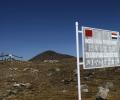
India and China are in what experts call 'a cooperation-versus-competition situation'.

The Indian IPO market recorded its highest monthly fundraising in September, with 34 mainboard companies raising 39,309 crore, despite a significant decline in the Nifty 50 index.

The Indian stock market experienced a significant downturn, with the Sensex crashing over 1,000 points and the Nifty hitting a fresh 52-week low, driven by sustained selling from foreign institutional investors, the RBI's monetary policy tightening, and elevated Brent crude prices.

Tata Consultancy Services (TCS) has stated that the recent suspension of eight IT firms, including itself, from a US green card programme will not impact its workforce strategy or customer engagements, citing its low number of applications and focus on local hiring.

Their message is blunt: Public scientific wealth should not be transferred at what they describe as 'throwaway prices'.capability, recruitment, promotional avenues and the voice of its employees.
